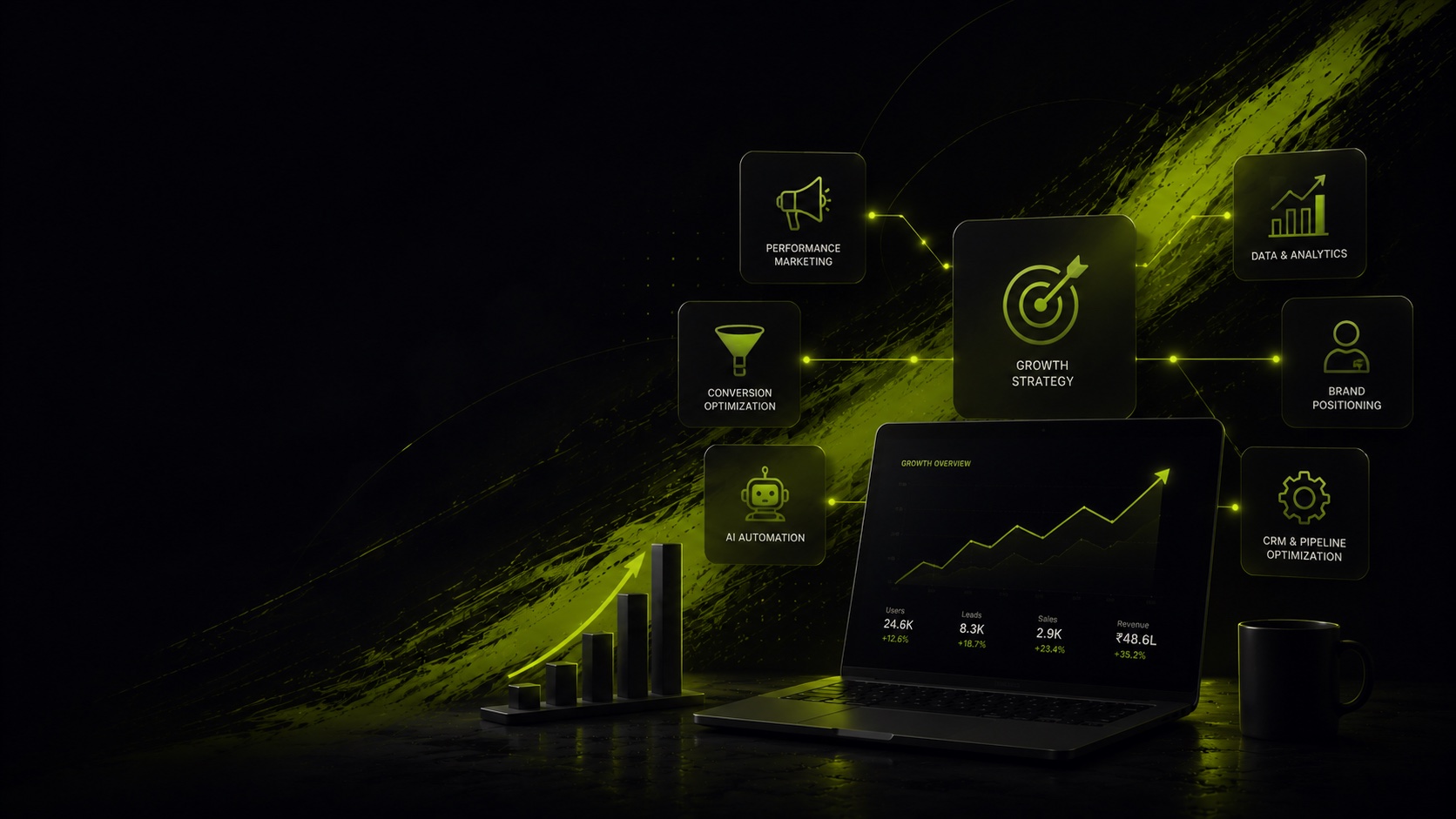
A store that looks beautiful and a store that sells are not the same build.
Most Shopify work is judged on how the homepage looks. Your customers judge it on how quickly they can find the product, trust you, and check out. I build for the second one, which happens to also look good.
Typically live in about 7 days.
Where D2C stores quietly lose money
US shoppers decide fast and abandon faster. The gap between a store that converts at 1% and one that converts at 3% is rarely the design. It is a handful of specific frictions that are easy to miss from the inside.
- ✕Product pages that describe features and never answer objections
- ✕Mobile checkout that takes one tap too many
- ✕A theme carrying so many apps the store loads slowly
- ✕Collections organised the way you think, not the way people shop
- ✕No reviews or trust signals anywhere near the buy button
- ✕Paid traffic pointed at a homepage instead of the product
None of these need a redesign. They need someone to look at the store as a buyer rather than an owner.
What the build includes
Everything aimed at one number: revenue per visitor.
Conversion led design
Layouts built around the buying decision, not around what looks impressive in a portfolio. Trust signals, reviews and clear calls to action where they influence the decision.
Speed as a feature
Lean themes and disciplined app use. On mobile, load time is a conversion setting, and most stores are paying for traffic that leaves before the page paints.
Product and collection structure
Variants, filters, collections and product pages organised so people find things and so search engines understand the catalogue.
Checkout and cart
The shortest credible path from interest to paid, with the friction taken out of the steps where people actually drop.
Shopify SEO built in
Clean URLs, metadata, structured data, image and internal linking done during the build rather than bolted on later.
Ready for AI discovery
Product entities and content structured so assistants can read and recommend your catalogue, which is increasingly where product discovery starts.
The 7 day launch
Fast because the process is decided in advance, not because steps are skipped.
Discovery
Products, margins, audience, competitors and what actually differentiates you. This is what the whole build hangs on.
Structure
Navigation, collections, page architecture and the conversion path, agreed before any design work starts.
Design and build
The store is designed, built, populated and optimised, with speed and mobile treated as requirements rather than a final pass.
Test
Every page across desktop, tablet and phone. Checkout, forms, payments and integrations get run properly, not glanced at.
Launch
Live with analytics, tracking and SEO in place from the first visitor, so you are measuring from day one.
The dashboards, not the adjectives.
Screenshots straight out of the ad accounts and search consoles. Every number below came from a real campaign, not a case study written after the fact.
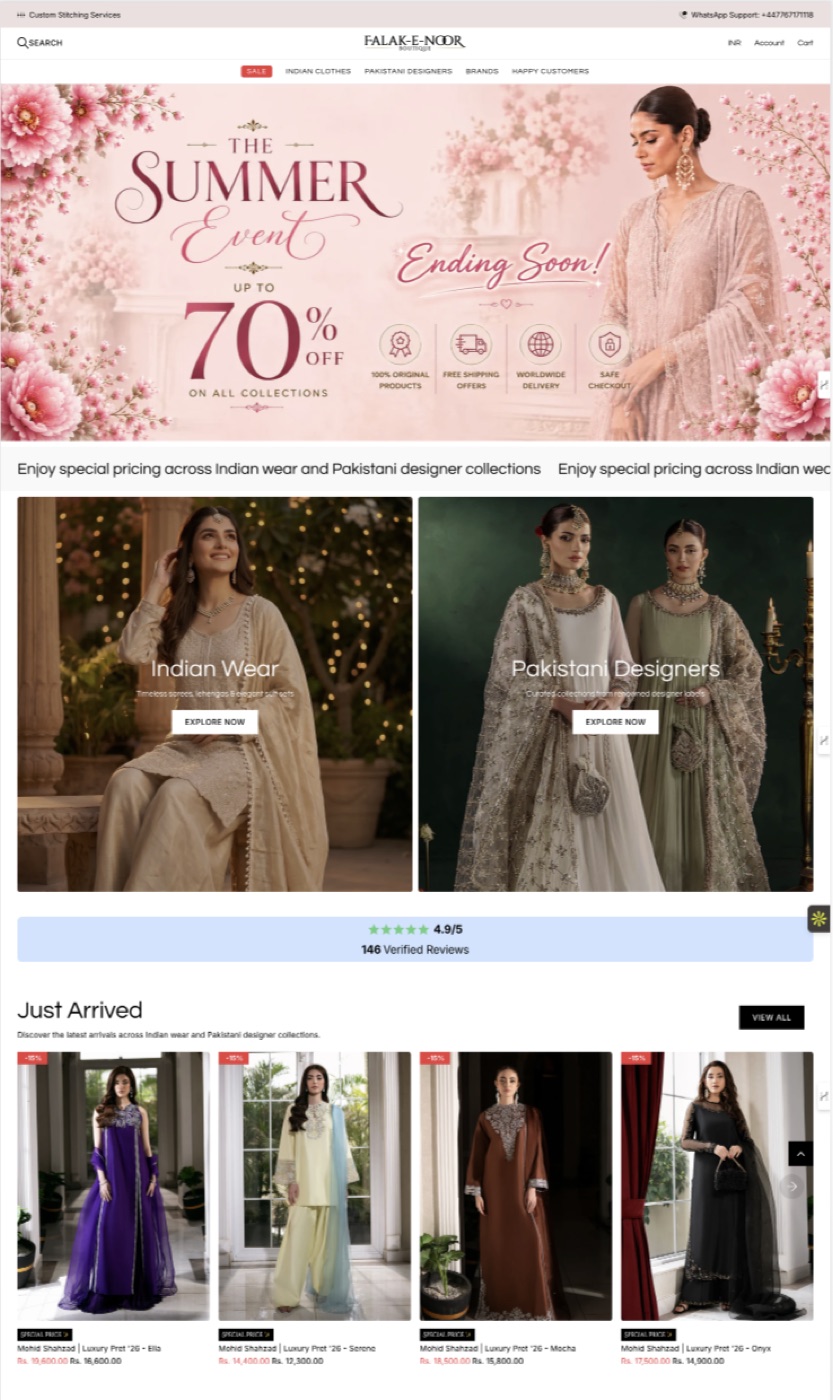
Falak-e-Noor: premium ethnic-wear store, 4.9★ from 146 reviews
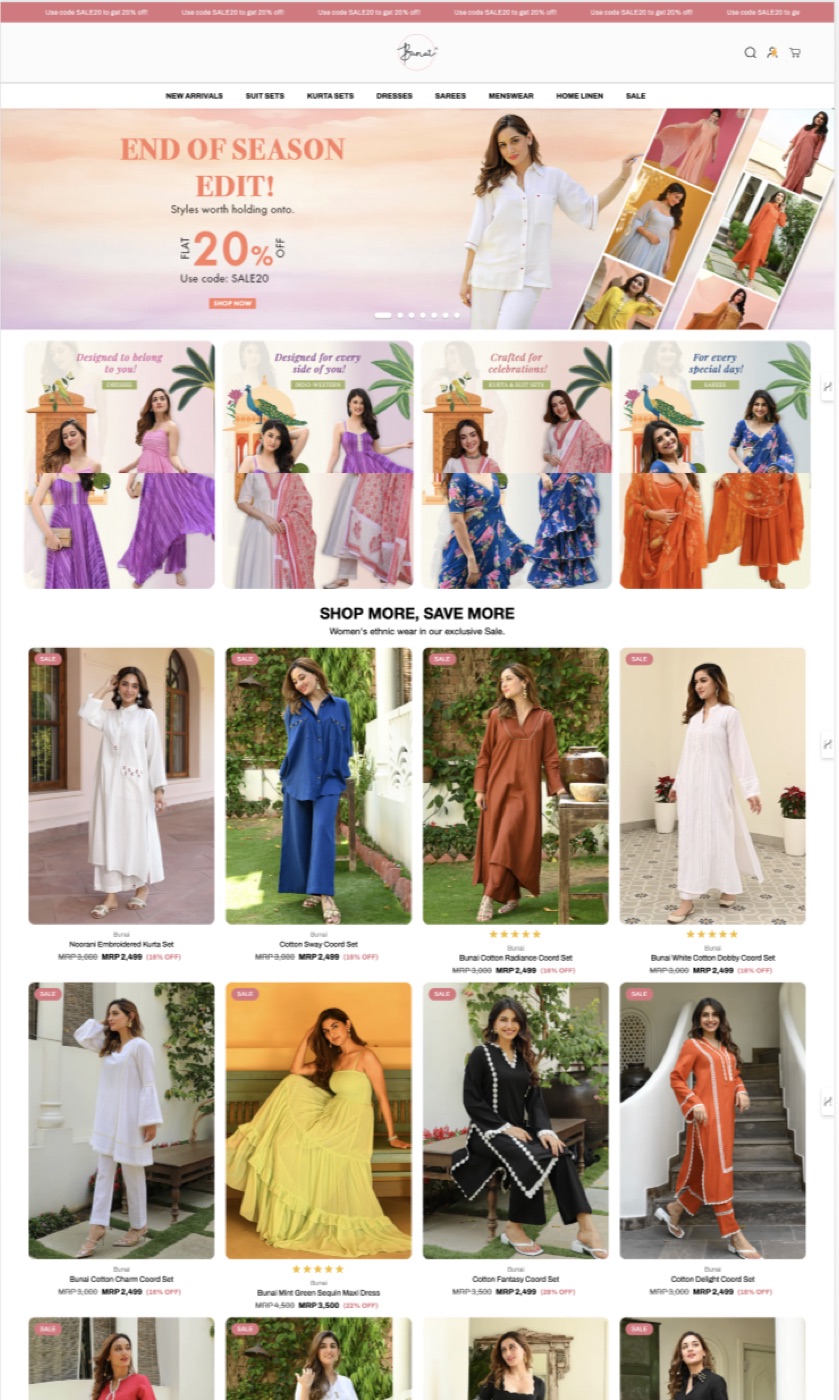
Bunaai: ethnic women’s-wear store built to convert
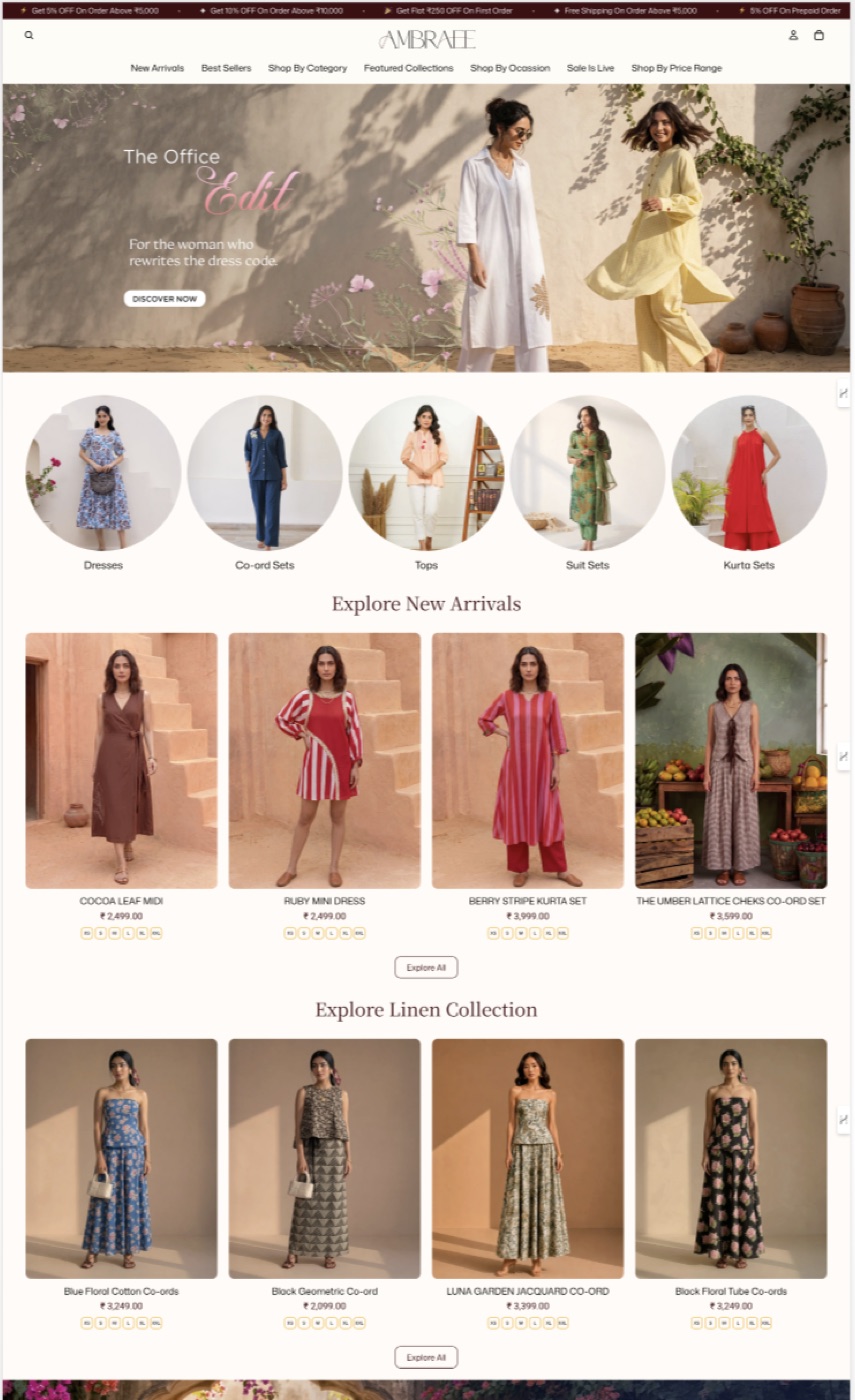
Ambraee: clean, category-led women’s fashion store
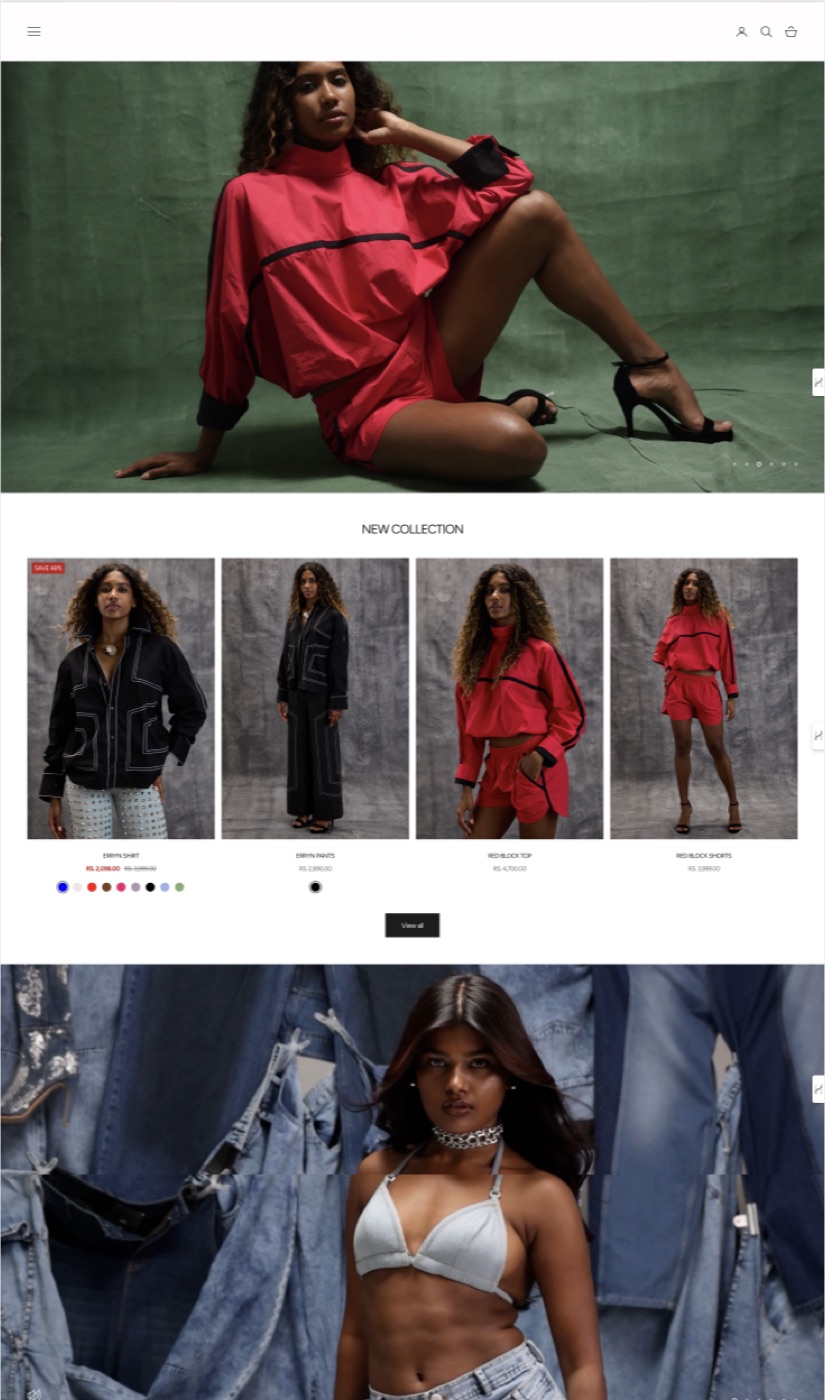
Bold editorial streetwear storefront with a premium feel
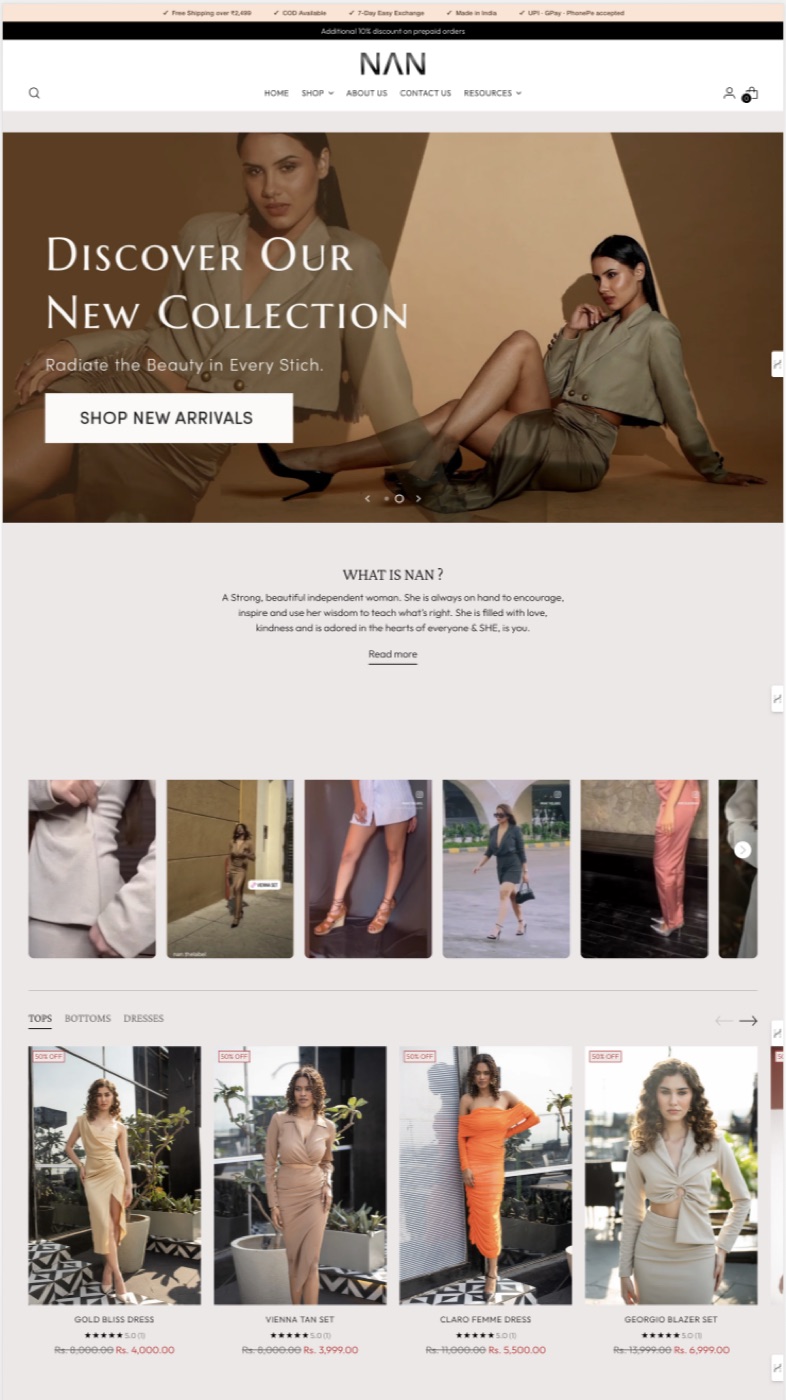
NAN: story-led premium women’s-wear store
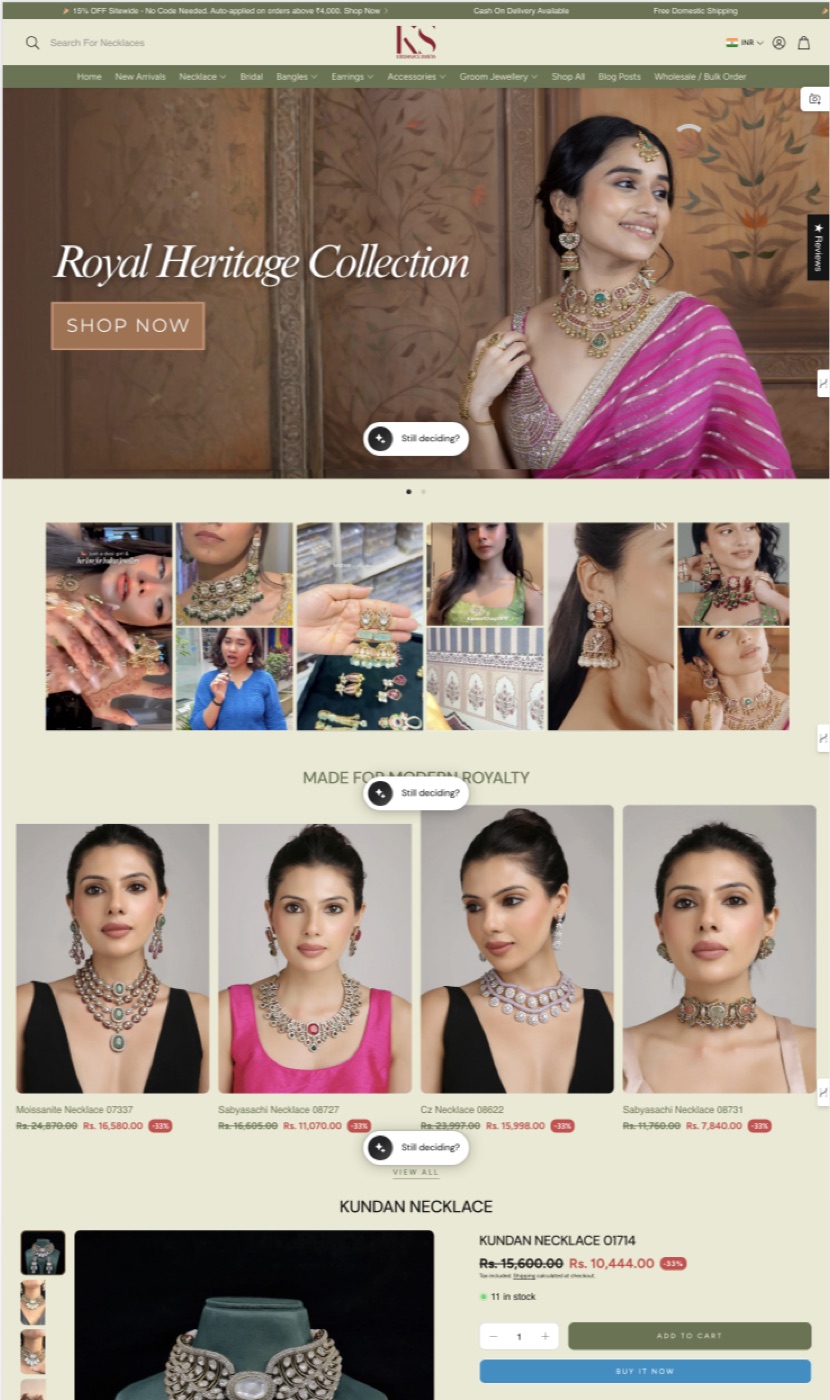
Heritage jewellery store with rich UGC product storytelling
Businesses I work with in USA
Sectors where this work reliably pays back. If yours is not listed, it is still worth asking.
Shopify Development in USA
The catch is that the scope is defined before we start. Seven days works for a focused, conversion led storefront on a well chosen theme, with your products and content ready. Bespoke functionality, complex migrations or large catalogues take longer, and I will tell you that upfront rather than after you have paid.
Yes. Products, customers, orders and content move across, and URLs get redirected properly so you do not lose the search rankings you already have. That redirect work is the step most migrations get wrong, and it is expensive to discover afterwards.
It is your Shopify account, under your billing, from the start. No proprietary theme you cannot edit, no dependency on me to make changes. If you want to bring it in house or hand it to another developer, nothing stops you.
Yes. Falak e Noor, Bunaai, Ambraee, Reynesaa, Varo Jewels, Tressential, Jutties Maker and Saalvi are all live builds across apparel, jewellery and footwear. Screenshots are on the portfolio page and further down this one.
I work with US companies remotely and I overlap with US hours, so calls land in your morning or afternoon rather than at odd times. Everything runs in your tools: your ad accounts, your analytics, your CRM, your repo. You own all of it. In practice the thing clients notice is that they talk to the person doing the work instead of an account manager relaying messages.
Get a straight assessment of your store
Send me your URL. I will go through it as a buyer would and tell you the specific things costing you sales, whether you are launching, migrating or fixing what you have.
Prefer WhatsApp? Message me on +91 85068 57769